
Founding the company
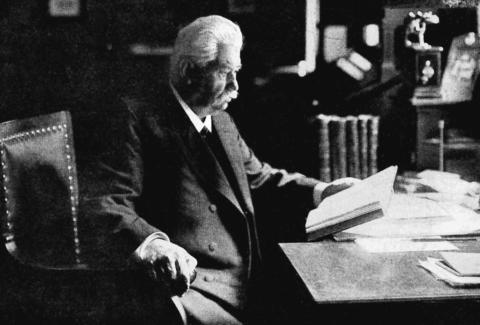
In 1866, the 26-year-old pharmacist Dr. Willmar Schwabe laid the cornerstone for the success of his company: he founded what was called a "manufacturing facility for dispensing medicines." His goal was to research and produce premium medicines at a standardized and consistent quality.
First location abroad
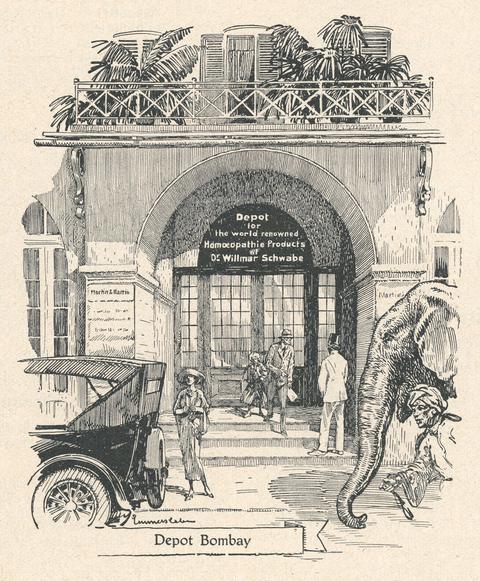
From the very beginning, Dr. Willmar Schwabe pursued a global vision for the company. In 1871, he established the first international depot in Geneva. In the following years, the company continued to expand, reaching as far as India by 1890.
Hamamelis extract marketed
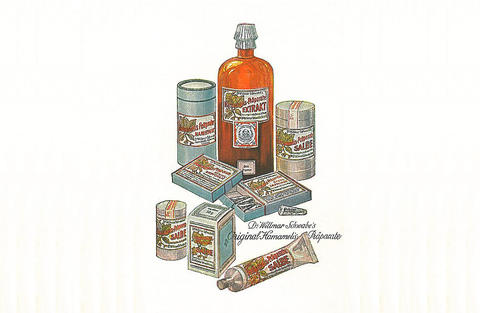
Dr. Schwabe published his Pharmacopoeia Homoeopathica Polyglottica in German, English and French. This reference work was the predecessor of what is now the Homeopathic Pharmacopoeia and the homeopathic section of the European Pharmacopoeia (Ph. Eur.). In the same year, a witch-hazel extract was first marketed as a phytopharmaceutical product. Over time it evolved into Hametum® ointment.
Innovation: manufacturing tablets
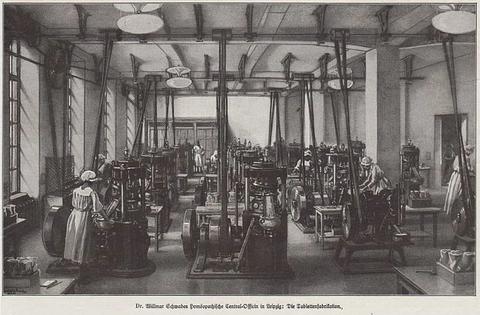
As one of the first pharmaceutical companies in Germany, Schwabe began producing tablets as a new dosage form. This move clearly demonstrates Schwabe’s foresight, particularly regarding the company’s international focus.
First production site abroad

The Dutch Schwabe depot, opened in 1899 in Zaandam, became the company’s first production site outside Germany in 1909. In 1926, Schwabe also opened its first overseas production facility in São Paulo, Brazil.
Willmar Schwabe II
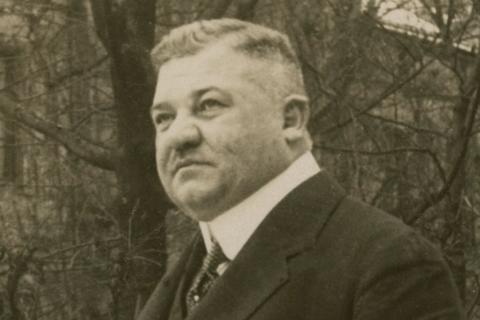
After his father’s death in 1917, pharmacist Dr. Willmar Schwabe II took over management of the company, guiding it through the challenging post-war years. From 1924 onwards, the company experienced renewed growth, due in part to his international approach. Willmar II intensified research activities, focusing on the development of phytopharmaceuticals and the standardization of herbal medicines.
New facility in Leipzig
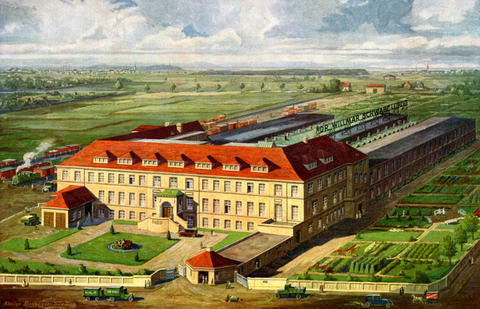
The company, which had grown to a staff of 300 employees, moved into a new facility in the Leipzig suburb of Paunsdorf. Greenhouses and fields for medicinal plants were also set up there. By that time, Schwabe was present all around the globe, including the Indian subcontinent as well as the Transvaal (now part of South Africa), Brazil and Mexico.
Research and development
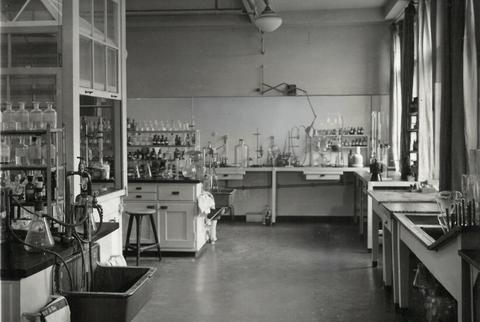
As of the early 1930’s, Schwabe, while still pursuing homeopathic business, began systematic research into and development of phytomedicines, including Prostagutt® and Plantival®. During this time, Schwabe developed path-breaking analytical methods.
Willmar Schwabe III and Wolfgang Schwabe
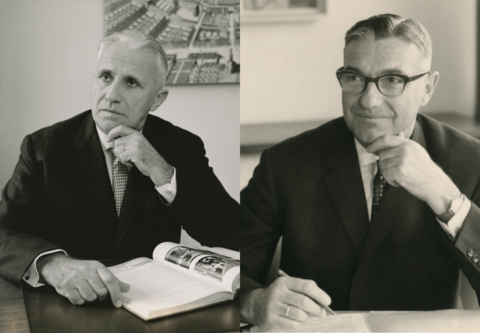
From 1935 onwards, the company was led by brothers Willmar III and Wolfgang, two very different personalities who complemented each other perfectly. Willmar III brought a strong interest in botany, but especially medical and pharmaceutical expertise, while Wolfgang had a background in both pharmacy and business administration. Their tenure marked a new beginning in Karlsruhe and a significant expansion of research activities.
Crataegutt® - strength for the heart
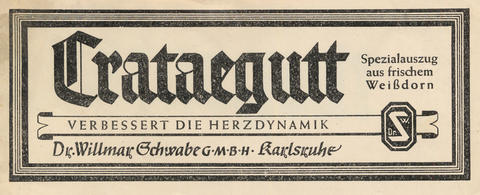
The hawthorn-leaf product Crataegutt® was first marketed in 1941. It contained a standardised hawthorn extract and served as a pioneer in terms of how research was conducted on other herbal special extracts.
The site in Karlsruhe-Durlach was opened

Especially at its new site in Karlsruhe-Durlach, the company began to focus more and more on research and development of phytopharmaceuticals which fulfilled the standards of evidence-based medicine. In the years that followed, Schwabe built new buildings for administration, research and production at this location.
DHU founded
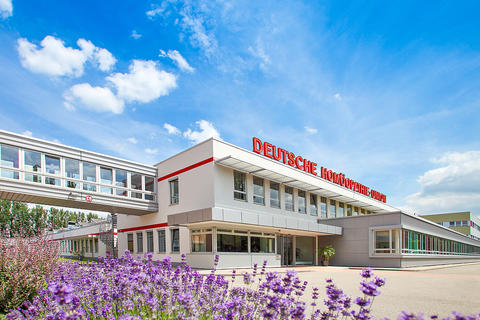
Deutsche Homöopathie-Union (DHU) was established as an independent company within the Schwabe Group. To this day it specialises in developing, manufacturing and distributing homeopathic drugs. The company Dr. Willmar Schwabe Arzneimittel concentrated on research and development of phytopharmaceuticals.
EGb 761® - the beginning of a success story
Tebonin® liquidum was marketed in 1965. It was followed in 1967 by Tebonin® film-coated tablets as well as Tebonin® sustained-release film-coated tablets. The ginkgo special extract EGb 761® in Tebonin® is now considered the world's most thoroughly researched and best-documented herbal extract.
Premium-quality raw materials - organically grown
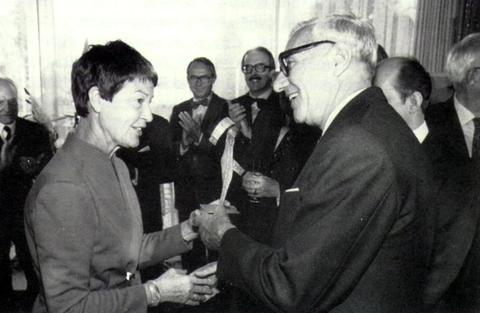
At a site near Karlsruhe, Schwabe began organically growing the medicinal plants needed to manufacture its proprietary products. In 1979, the Schwabe company received the “Silver Plant” award by the Foundation for the Protection of Endangered Plants because of its endeavors to cultivate protected plant species. The visitor center at the heart of the complex was nominated for the Baden Architecture Prize in 2022.
Expanding the company's international role

Dr. Wolf-Dietrich Schwabe (left), who studied business, and Dr. Klaus-Peter Schwabe, a trained biochemist, became members of the company's senior management in 1976 and 1977. In 1986, Norbert Keller was appointed to the executive board as well. From that time onward, Dr. Willmar Schwabe Arzneimittel gradually evolved into what is now the globally active Schwabe Group by founding companies as well as acquiring other businesses and becoming shareholders.
Growing ginkgo

In 1980, Schwabe began growing ginkgo in the United States and, shortly thereafter, in France, developing its own innovative cultivation methods — still globally unique today — for sustainable and efficient production.
Umckaloabo® – a new member of the Schwabe family
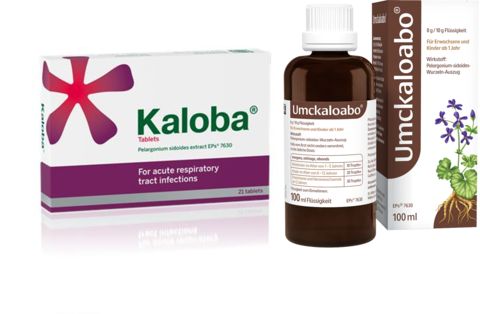
In 1987, Umckaloabo® became a new product in the Schwabe portfolio. Umckaloabo® – globally known as Kaloba® – is a major success both throughout Germany and around the world. It has undergone extensive scientific research which continues to this day.
A green light for food supplements
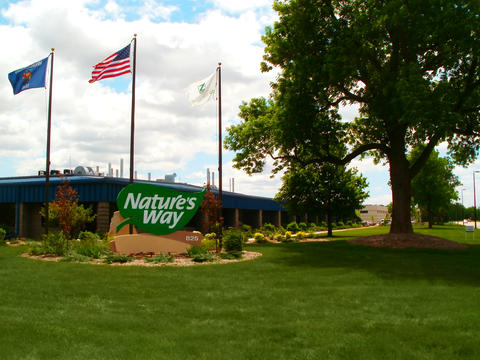
In 1992, Schwabe acquired a one-third stake in Murdoch Holding Company (USA) and established the food supplements business unit within the Schwabe Group. Since 2001, Schwabe has been the sole owner of its American subsidiary. In the following years, the company — known as Nature’s Way — developed into a major contributor to the Group’s sales.
Organically certified medicinal plant cultivation
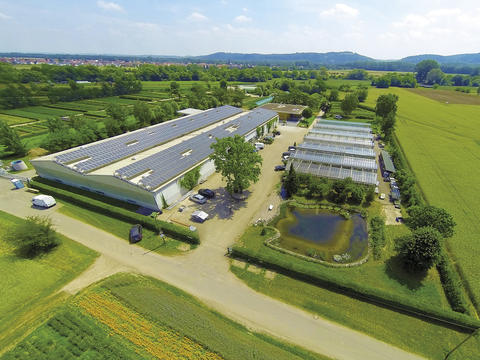
In 1998, the medicinal plant cultivation in Staffort received certification in compliance with organic farming standards. This ecologically recognized method of cultivation ensures the premium quality of our homeopathic medicines.
Consolidation of the Schwabe Group
In the 2000s, a major restructuring process began within the Schwabe Group and continued through to the late 2010s. Previously, the company’s global presence had been characterized by relatively independent joint ventures. This period marked the consolidation of all individual entities into a single corporate group with a unified presence under the Schwabe name.
Dr. Dirk Reischig appointed CEO
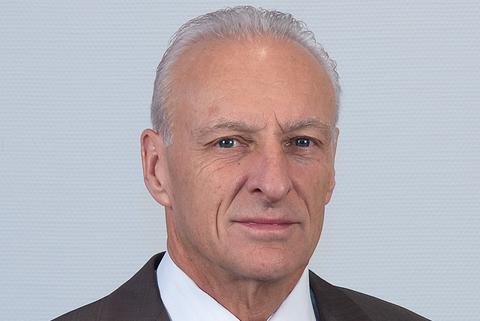
In 2004, Dr. Dirk Reischig became the first CEO from outside the Schwabe family to lead the Schwabe Group. He focused on systematically building the Schwabe brands among consumers; he also built up direct engagement with physicians and pharmacists beyond the traditional statutory health insurance business.
Largest acquisition to date
With the acquisition of Enzymatic Therapy®, the Schwabe Group expands its U.S. probiotics portfolio with Probiotic Pearls® and enters the clinician-curated supplements segment with Integrative Therapeutics®. Alive! from Nature’s Way remains successful in the U.S. mass market.
Lasea® launched on the market
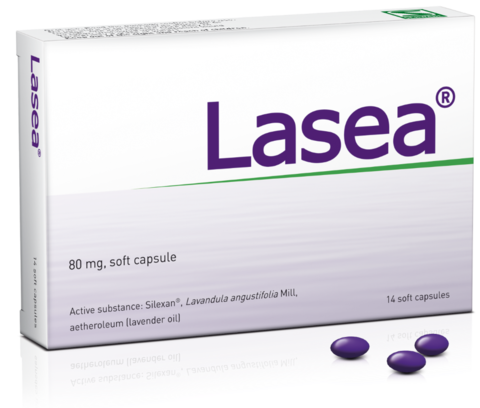
In 2010, Schwabe launched Lasea®, a new product containing a special oil derived from medicinal lavender, for the treatment of restlessness associated with anxious moods.
Establishing the Umckaloabo Foundation
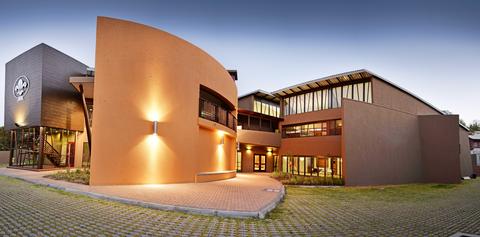
The Schwabe Group expanded its social engagement by creating the Umckaloabo Foundation, which supports educational projects for children and young people in southern Africa. Its first project was building the Scout Center in Mpumalanga, South Africa.
Gaspan® launched
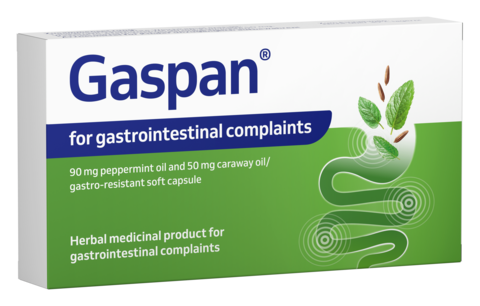
In 2015, Schwabe introduced Gaspan®, a unique combination of peppermint oil and caraway oil, for the relief of gastrointestinal discomfort.
Olaf Schwabe named Schwabe Group CEO
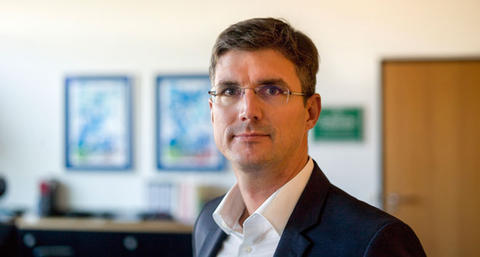
In 2016, the year of the company’s 150th anniversary, Olaf Schwabe, the great-great grandson of the company founder Dr. Willmar Schwabe, took on leadership of the corporate group. As the CEO, Olaf Schwabe is also the head of a five-member Group Executive Team (GET) which is responsible for the Group’s global strategy and its business management. The other members of the GET are Dr. Anke Balzer, Oliver Schulz, Joachim Thole and Dr. Frank Waimer.
Pegaso® probiotic line
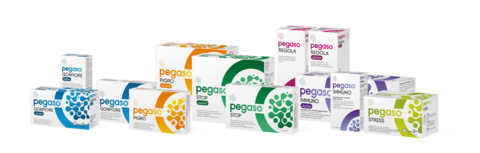
With the acquisition of Pegaso®, the Schwabe Group began marketing food supplements in Europe for the first time. This offers another natural solution for gastrointestinal problems—with an even better formulation since 2023.
Nature's Way Europe founded

Building on the positive experience in the North American market, the Schwabe Group expanded its portfolio in Europe in 2021 by establishing Nature’s Way Europe. The company now offers high-quality dietary supplements, initially focused on online marketplaces.
Refluthin®, a Schwabe innovation
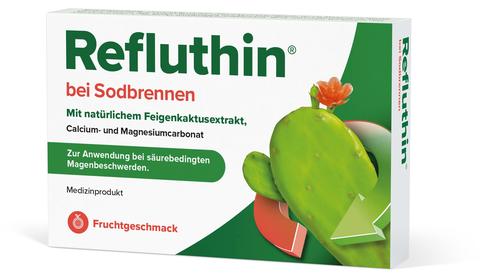
In 2021, Schwabe launched the innovative health solution Refluthin® for heartburn, featuring a combination of prickly pear cactus and mineral acid buffers.
naturalX Health Ventures

Schwabe launches naturalX Health Ventures to invest in science-backed consumer healthcare startups at the intersection of wellness and medicine. The venture aims to bring together the best of natural and digital health, fusing heritage with cutting-edge innovation.
Braineffect joined the Schwabe Group
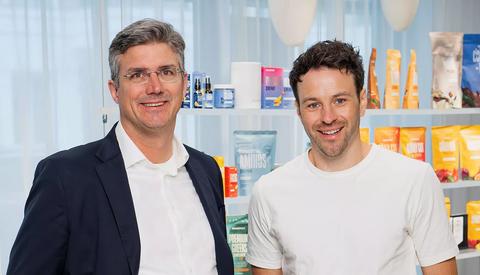
The Schwabe Group became the majority shareholder of Braineffect, a Berlin-based start-up founded in 2016 with strong potential for innovation and growth. With this acquisition, another leading brand for mental and physical well-being became part of the Schwabe Group, supported by a team of over 60 employees.
Celebrating a double anniversary: 160 years of Schwabe …

In 2026, the Schwabe Group celebrated two milestones at once. Ever since its founding in 1866, Schwabe has played a key role in establishing phytotherapy. Through its intensive research, the Group has made ginkgo extract the world’s most thoroughly studied plant extract. Today, Schwabe is a global leader in phytopharmaceuticals.
… and 50 years of Terra Medica®

In 2026, the Terra Medica® medicinal plant cultivation near Karlsruhe celebrated its 50th anniversary. Terra Medica has provided premium-quality raw materials since 1976. Thanks to its organic cultivation methods and the wide variety of plants grown, the site is home to many different—and even rare—animal species, making a demonstrable contribution to biodiversity in the region.
Schwabe invested in NeuroNation

The Schwabe Group acquired a majority stake in Synaptikon GmbH, the company behind the brands NeuroNation and NeuroNationMED. With this investment, Schwabe expanded its portfolio of digital health solutions and strengthened its position in the field of cognitive health.
Schwabe acquired a majority stake in Hydraid®
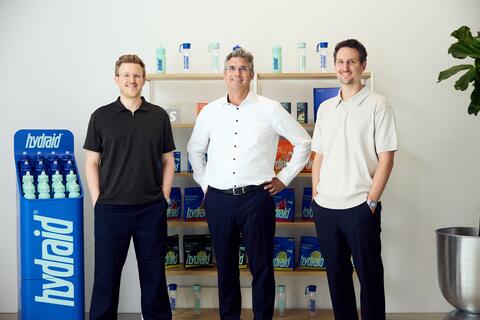
The Schwabe Group acquired a majority stake in hydration pioneer Hydraid® – bringing together an established healthcare company and an agile start-up in functional sports hydration. This strengthens our position in the market for natural health solutions.

We accept responsibility: for a healthy company, for the environment and for society.
Our path to sustainability

We create natural health solutions for today’s consumers with our pharmaceutical expertise.
Our Health Interests

Entrepreneurial, scientific and pharmaceutical expertise needs experts ... like you!